 how-to
Why Car Keys Break in Ignition: Causes and Safe Removal Steps
Quick Summary
Car keys break in ignition because soft key metal wears thin over thousands of turns and the ignition cylinder needs more force than the weakened blade can take. Cold weather makes brittle key metal worse, so a worn key can snap under normal turning force. Stop turning, confirm the ignition is off, and try gripping any exposed fragment with pliers.
- A key that wiggles loosely in the ignition is already a warning sign of wear.
- Clamp an exposed fragment with pliers and pull straight out, never twist.
- Spray graphite or silicone lubricant into the lock before using an extraction tool.
- If the fragment will not come out after two careful attempts, stop and call a mobile locksmith.
- Spray lubricant into the ignition lock once or twice a year using a small amount.
Table of Contents
- Why Car Keys Break in Ignition: The Wear and Fatigue Behind It
- How to Remove a Broken Key from the Ignition Cylinder
- Car Key Broke Off in Ignition and Car Won't Start: What to Do Next
- The Right Tool to Remove a Broken Key from Ignition
- When DIY Removal Risks Damaging the Ignition
- How to Prevent a Car Key from Getting Stuck in Ignition
- Mobile Broken Key Extraction in Manassas Park
- Get Your Broken Key Removed and a Spare Key Made
- Frequently Asked Questions
Why Car Keys Break in Ignition: Causes and Safe Removal Steps
Call Now: Call (571) 300-6791 | Get a Free Estimate
Last Updated: November 4, 2026
Why Car Keys Break in Ignition: The Wear and Fatigue Behind It
A car key breaks in the ignition because the metal has been weakened over time, and the ignition cylinder needs more force than the key can take. At ADAM Keys & Remote, we see this most often on older keys that have been turned thousands of times. The break is rarely sudden. It is the end of a slow process.
Key Wear and Metal Fatigue
Every turn of the key puts stress on the same spots. Modern keys are cut from soft metal, so the blade wears down where it meets the pins inside the lock cylinder. After years of repeated use, the key gets thinner and looser.
Watch out: a key that wiggles loosely in the ignition is already a warning sign. Keep using it and you raise the odds of a break.
Cold Weather and Brittle Key Metal
Cold weather makes brittle key metal worse. In freezing temperatures, the metal contracts and loses some flexibility. The ignition lock can also stiffen as lubricant thickens. A driver then turns harder, and a worn key gives way. Early mornings in January are a common time for this call. If your key feels stiff in cold weather, warm the car first and turn gently.
How to Remove a Broken Key from the Ignition Cylinder
Here is how to remove a broken key from the ignition cylinder: stop turning, confirm the ignition is off, and try to grip the exposed fragment with pliers before reaching for a wire or extraction tool. For a full step-by-step walkthrough, see what to do if your key breaks in the ignition.
Before you touch anything, diagnose why the key broke. The removal method and the risk of damage depend on the cause:
- Worn key blade. The metal has thinned at the cuts, so the key sits loose and bends more with each turn. The fragment usually comes out with light, straight pulling because the break is clean.
- Damaged or worn lock cylinder. Pins or springs are sticking, so the key binds and the driver turns harder. A fragment in a worn cylinder is more likely to jam, and the cylinder may need repair after extraction.
- Misalignment or forced turning. The key was not fully seated, the steering lock was engaged, or the driver yanked the wheel and key together. These breaks often leave the fragment angled against a pin.
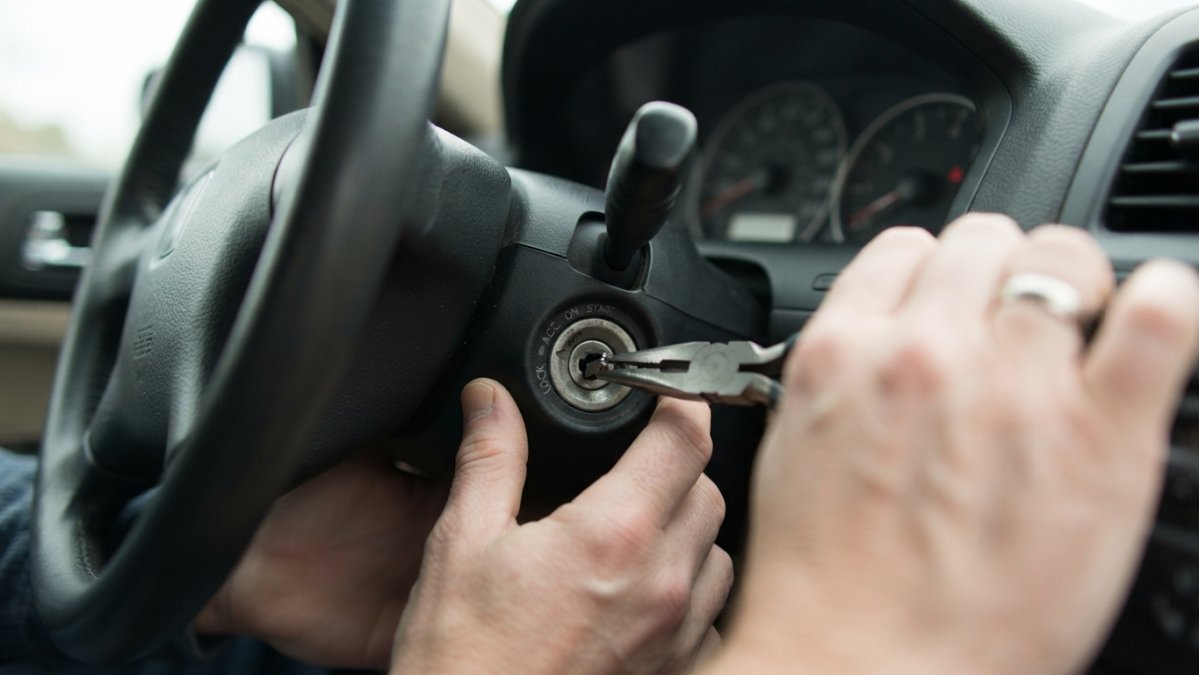
Using Pliers or Grips When Part of the Key Is Exposed
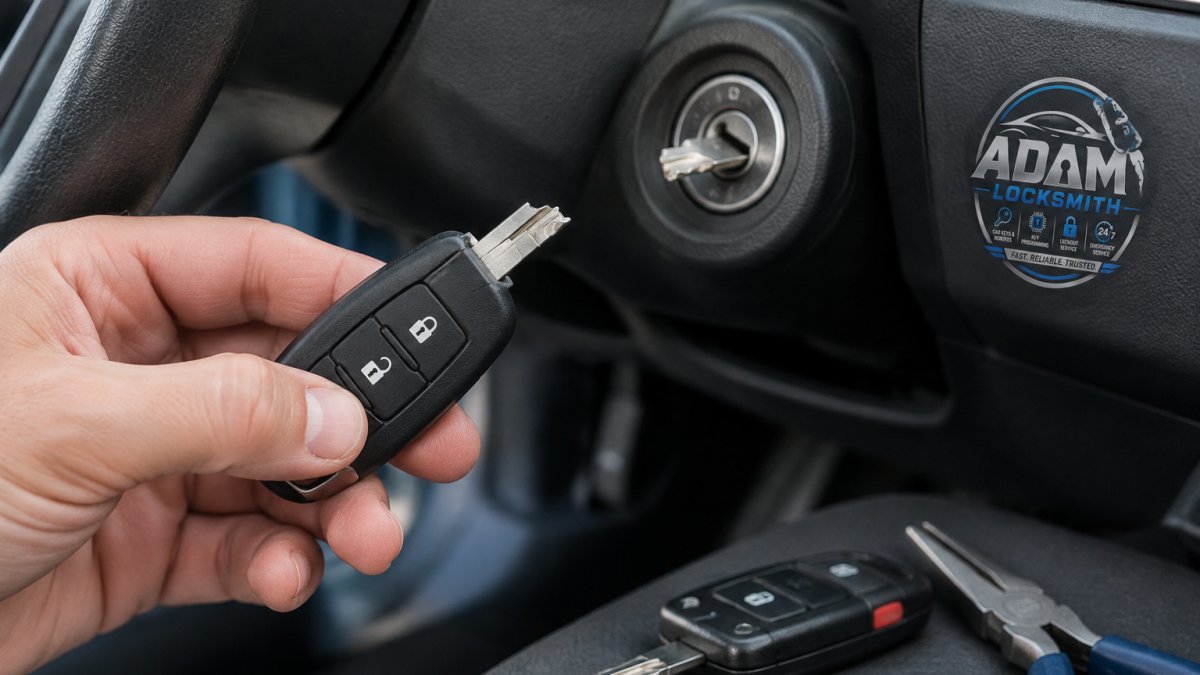
If part of the key sticks out, pliers or mole grips are your best first try. Clamp the fragment firmly, then pull straight out. Do not twist. Jiggle it slightly as you pull gently. If the key does not move after two or three tries, stop.
Watch out: gripping and twisting is the most common way drivers bend a pin inside the cylinder, which turns an extraction into an ignition repair.
Using a Thin Wire or Extraction Tool
When the fragment sits flush or below the surface, a thin wire or a broken-key extractor can work. A piece of stiff stainless steel wire with a small hook bent at the tip can catch the edge of the key. Slide it along the top of the cylinder, hook the fragment, and pull gently. A proper extraction tool does the same job with better grip.
Vehicle and Key Type Considerations
The key type changes both the extraction and what comes next:
- Traditional metal keys usually leave a clean fragment that pliers or an extractor can reach. A replacement can often be cut from the original code or a spare.
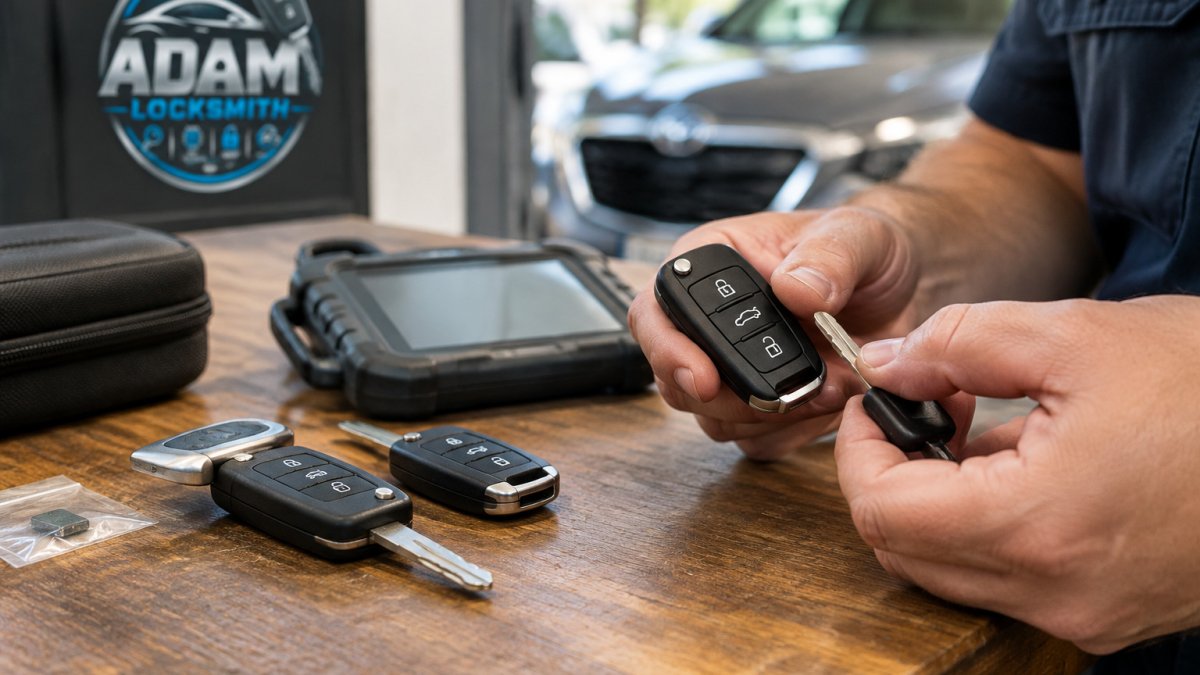
- Transponder keys carry a chip in the head. If the head is what broke off, the chip may still be intact, but the car will not start until a programmed replacement is made.
- Smart keys and push-to-start fobs do not turn a mechanical cylinder in the same way, so a break usually happens in a door lock, trunk lock, or emergency key slot rather than the ignition. Extraction is similar, but the replacement fob must be programmed to the vehicle.
Stop-Doing List
Some improvised methods spread online cause more damage than the original break. Do not:
- Push the fragment deeper with a screwdriver, drill bit, or another key
- Use superglue or adhesive to try to pull the fragment out
- Flood the cylinder with lubricant; excess oil traps debris and gums up pins
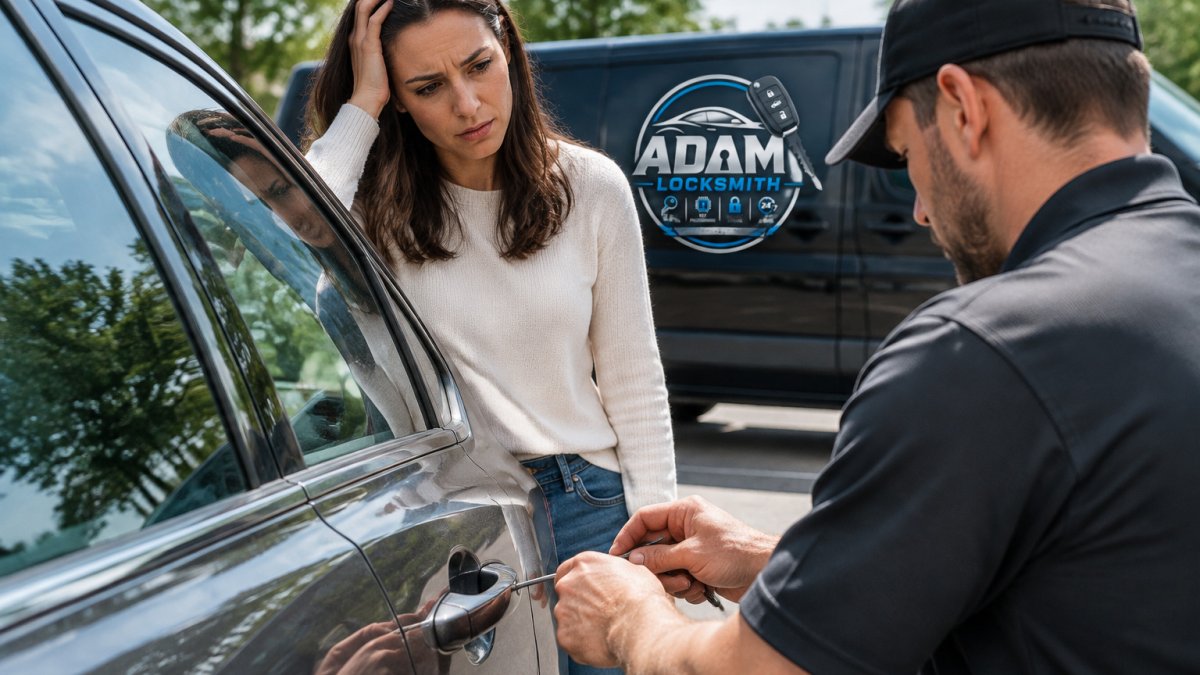
If the fragment will not come out after two careful attempts, stop and call a mobile locksmith. ADAM Keys & Remote handles broken key extraction on site in Manassas Park and the surrounding Northern Virginia area. Call (571) 300-6791 or request a Free Estimate.
Car Key Broke Off in Ignition and Car Won't Start: What to Do Next
A car key broke off in the ignition and the car won't start because the ignition switch cannot complete its turn. First, check that the ignition is fully off and the steering wheel is not locked.
A transponder key adds one more issue. Even after the fragment is out, the chip in the broken key is gone. The car may crank but not start until a new programmed key is made.
The Right Tool to Remove a Broken Key from Ignition
The right tool to remove a broken key from the ignition is a broken-key extractor, a slim tool with a hooked or serrated tip made for this exact job. Needle-nose pliers work when the key is exposed. A thin stainless steel wire works as a backup. What you should not use: drill bits, screwdrivers, superglue, or anything that pushes the fragment inward.
| Situation | Best Tool | What to Avoid |
|---|---|---|
| Key sticks out of the cylinder | Needle-nose pliers or mole grips | Twisting the fragment |
| Key sits flush with the surface | Broken-key extractor | Screwdrivers |
| Key is deep in the barrel | Thin hooked wire plus lubricant | Superglue, drills |
| Fragment will not budge | Call a mobile locksmith | Forcing or prying |
When DIY Removal Risks Damaging the Ignition
DIY removal risks damaging the ignition when the fragment is deep, the cylinder is already worn, or the key will not turn at all. If your key is stuck and will not turn, read about why a car key gets stuck in ignition before you try anything.
Know the signs of a failing cylinder too. Our guide to the signs of a bad ignition cylinder explains what to watch for.
How to Prevent a Car Key from Getting Stuck in Ignition
Preventing a stuck or broken key comes down to three habits: keep the key clean, keep the lock lubricated, and replace worn keys early. But prevention only works if you know which part is actually wearing out. A key that keeps sticking is telling you something, and the fix depends on whether the problem is the key, the cylinder, or the way you turn it.
Diagnose Before You Replace
- The key is worn if the blade looks thinner at the cuts, the key wiggles loosely in the ignition, or a spare key turns more smoothly than the original.
- The cylinder is worn if the key only works at one angle, you feel a grinding or catching sensation, the key sticks in cold weather but not warm, or the dash lights flicker when you turn the key.
- The turning habit is the problem if you routinely yank the wheel and key together, hang a heavy keyring from the ignition key, or force the key when the steering lock is engaged.
If the spare key turns smoothly and the original does not, replace the original. If both keys stick, the cylinder needs attention. Our guide to the signs of a bad ignition cylinder explains what to watch for.
Prevention Checklist
- Spray graphite or silicone lubricant into the ignition lock once or twice a year, using a small amount
- Wipe your key clean and check the blade for thinning or burrs
- Stop hanging a heavy keyring from the ignition key
A heavy keyring is a common mistake. The extra weight pulls on the key and the lock cylinder every time you drive, and the constant load accelerates wear on both.
Post-Repair Checks
After a broken key is removed, check these before you drive normally:
- Test the spare key first. If the spare turns smoothly, the cylinder is likely fine and only the key was worn. If the spare also sticks, the cylinder needs service.
- Look at the cylinder face. A cracked or pushed-in face, a loose bezel, or a key that no longer seats fully are signs the extraction or the break damaged the cylinder.
- Check the ignition switch. If the car cranks but the dash lights behave oddly, or the key turns but the starter does not engage, the switch may have been stressed.
Watch out: driving with a fragment still lodged in the cylinder, even if the car starts with a spare, can damage the pins further and turn a simple extraction into an ignition replacement.
If you are in Manassas Park or nearby and want a worn key replaced or a spare made before the next break, ADAM Keys & Remote provides mobile service from 7:00 AM to 11:30 PM daily. Call (571) 300-6791 or request a Free Estimate.
Mobile Broken Key Extraction in Manassas Park
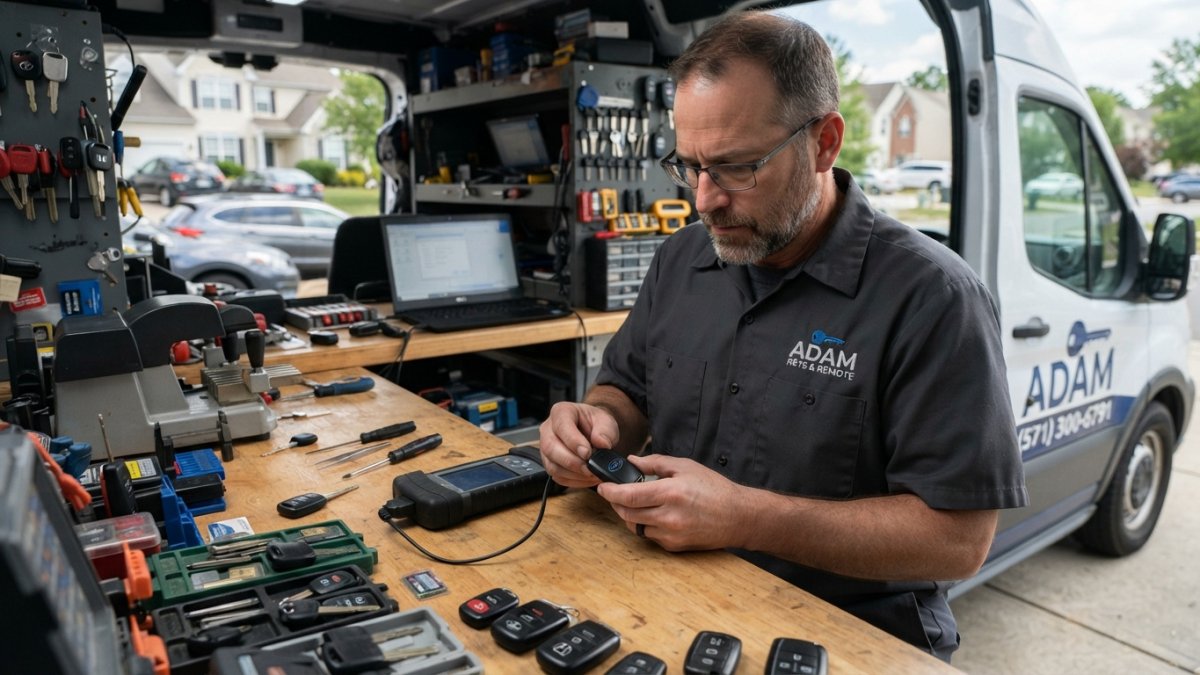
Drivers in Manassas Park can get broken key extraction on site, at home or at the roadside. ADAM Keys & Remote brings the tools and programming equipment to your vehicle, so you do not need a tow. We serve Manassas, Woodbridge, Fairfax, Centreville, and the surrounding Northern Virginia area. See our Manassas and Northern Virginia service area for coverage and to request on-site help.
Get Your Broken Key Removed and a Spare Key Made
Once the fragment is out, the next step is a new key, and a spare is worth having. Learning the benefits of a spare car key makes the case clearly.
Call ADAM Keys & Remote at (571) 300-6791 or request a Free Estimate to get your broken key removed and a spare made. We provide mobile automotive locksmith service across Manassas Park and Northern Virginia.
Frequently Asked Questions
What should I do if my car key breaks in the ignition?
Stop turning the ignition and do not try to start the car. If a piece of the key sticks out, grip it with pliers and pull gently and straight out. If the fragment sits flush or inside the cylinder, do not poke at it with screwdrivers or paper clips, because you can push it deeper or damage the lock cylinder. Call a mobile automotive locksmith such as ADAM Keys & Remote at (571) 300-6791 for on-site extraction in Manassas Park and nearby Northern Virginia areas.
Can a broken key stop a car from starting?
Yes. A fragment lodged in the ignition cylinder can block the lock pins from turning, so the key won't turn even when you insert a spare. On transponder-equipped vehicles, the remaining chip in the spare key still needs to be read by the immobilizer, but the mechanical blockage comes first. The fragment has to be extracted before the ignition will work normally again.
What tool do I need to remove a broken key from the ignition?
The common tools are needle-nose pliers or mole grips for a key stub that protrudes, and a thin piece of stainless steel wire or a dedicated broken-key extractor for fragments sitting deeper. Never use superglue, and avoid forcing anything that could bend the lock pins. If the fragment does not come out with light, steady pressure, stop and let a locksmith handle it rather than risk a costly ignition repair.
How can I prevent my car key from getting stuck in the ignition?
Use a spare key before the primary one shows heavy wear, keep the ignition lock lubricated with a graphite or silicone-based lock lubricant, and avoid hanging a heavy keychain from the ignition. In cold weather, let the car warm slightly before turning a stiff key. If the key feels rough going in or needs jiggling to turn, have a locksmith inspect the cylinder and cut a fresh key before it snaps.
A broken key in the ignition is stressful, but it is fixable. If the fragment will not come out cleanly, or you would rather not risk the cylinder, ADAM Keys & Remote can help. Our mobile service brings broken key extraction, ignition repair, and key programming to your location, and our team works on smart keys and key fobs for many vehicles. Call (571) 300-6791 or request a Free Estimate and get back on the road.