 how-to
Can Locksmiths Program Modern Push to Start Keys?
Table of Contents
- How Push-to-Start Technology Actually Works
- Can Locksmiths Program Modern Push-to-Start Key Fobs?
- Dealer vs Locksmith Key Programming: What You Need to Know
- How Long Does It Take to Program a Car Key?
- Mobile Car Key Programming Services: What to Expect
- VIN-Based Programming and Troubleshooting Failed Attempts
- Push-to-Start Programming: Self-Service vs. Professional Locksmith
- Conclusion
Last Updated: August 26, 2026
Many drivers are surprised to discover that qualified auto locksmiths can program modern push-to-start systems, though the process is far more technical than cutting a traditional key. At ADAM Keys & Remote, we work with push-to-start systems across many vehicle makes and models, and we know firsthand that this is one of the most misunderstood services in the automotive locksmith industry. Below, we'll walk through exactly how these systems work, what separates a capable locksmith from one who will leave you stranded, and what to watch out for when you need smart key programming done right.
The short version: not every locksmith can handle modern push-to-start keys. The ones who can need specialized diagnostic equipment, up-to-date vehicle security databases, and hands-on experience with immobilizer systems.
How Push-to-Start Technology Actually Works
Push-to-start technology is a passive keyless entry and ignition system that allows drivers to start their vehicle without inserting a physical key. The system relies on a proximity key communicating wirelessly with the vehicle's electronic control unit to authenticate the driver before allowing ignition.
Proximity Keys, Transponder Chips, and the Immobilizer System
A proximity key (also called a smart key) contains a transponder chip that broadcasts a low-frequency radio signal. When you approach the vehicle, the car's antenna detects that signal and cross-references it against the immobilizer system, a security layer built into the ECU that physically prevents the engine from starting without a recognized key signal.
The immobilizer system is the real gatekeeper. It stores encrypted codes tied to each authorized key. If the transponder chip's rolling code doesn't match what the ECU expects, the engine won't crank. This is why simply copying the physical shape of a key does nothing for a push-to-start vehicle, the electronic component must be programmed separately.
Keyless entry and push-to-start functionality often run on different frequencies. The remote functions (lock, unlock, trunk release) typically operate at 315 MHz or 433 MHz, while the immobilizer communication uses a separate low-frequency channel. A key fob that unlocks your doors but won't start the car usually has a programming issue with the transponder side.
Key Cutting vs. Key Programming: Two Separate Steps
Key cutting and key programming are entirely separate processes, and both are required for a functioning push-to-start replacement.
Key cutting involves shaping the physical blade to match the vehicle's ignition cylinder profile. For many push-to-start vehicles, this is a remote head key, a fob with a small physical blade tucked inside for mechanical backup.
Key programming is the electronic process of registering the transponder chip's unique code with the vehicle's immobilizer system and ECU. Without this step, the car recognizes the physical key but the engine won't start. Programming requires direct communication with the vehicle's onboard computer, typically through the OBD-II port.
Both steps require professional equipment and cannot be skipped.
Can Locksmiths Program Modern Push-to-Start Key Fobs?
Yes, a qualified auto locksmith can program modern push-to-start key fobs, provided they have the right diagnostic tools and access to the vehicle's security protocols. The capability depends entirely on the locksmith's equipment and training.
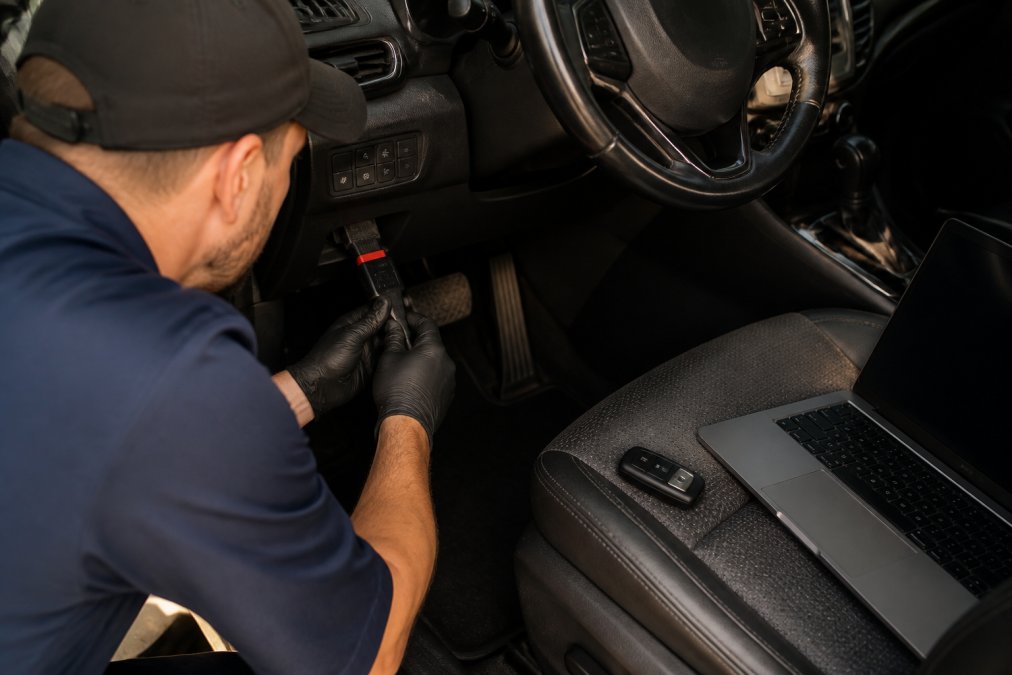
A well-equipped mobile locksmith can handle the majority of common vehicles. Certain newer models with advanced encryption, particularly some 2022+ European and luxury brands, may require dealer-level access that only the manufacturer's proprietary systems provide.
What Diagnostic Tools and Dealer-Level Access Are Required
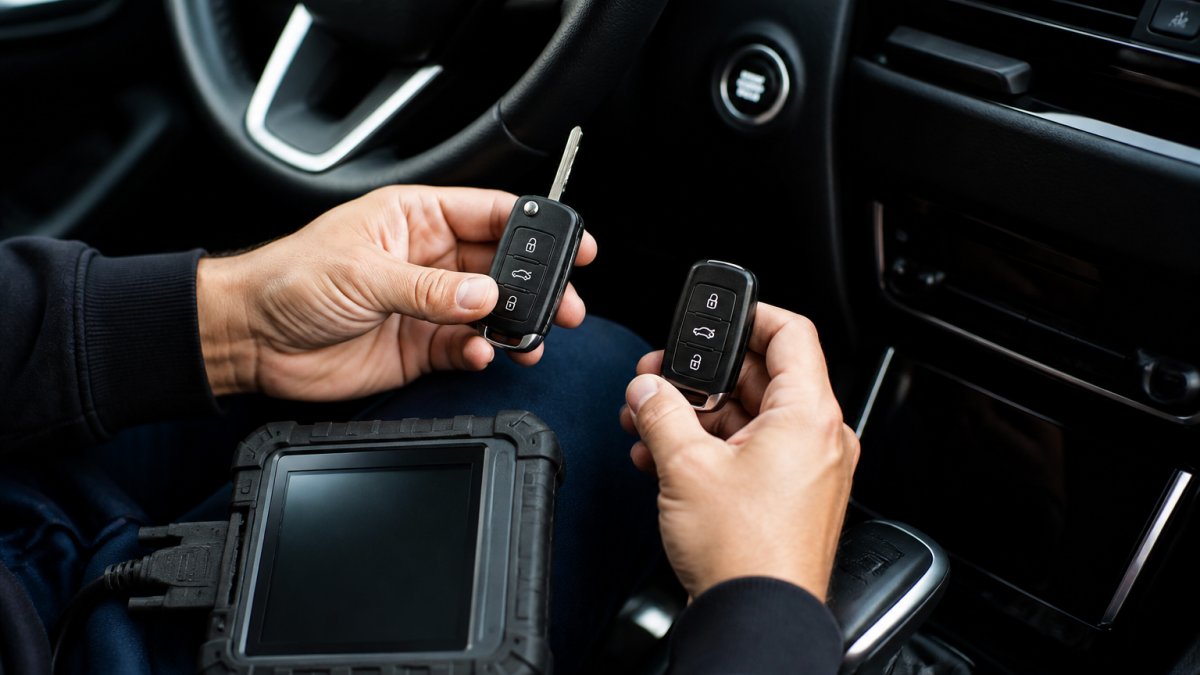
Programming a push-to-start key fob requires a professional key programmer that connects to the vehicle's OBD-II port and communicates with the ECU. These tools read the vehicle's existing immobilizer data, generate a compatible encrypted code for the new key, and write that code to both the key and the vehicle's security system.
According to the Society of Automotive Engineers' technical standards on vehicle security systems, modern vehicle immobilizer protocols have grown significantly more complex, with many manufacturers now using multi-layer encryption that requires manufacturer-specific security clearance to access.
Dealer-level access refers to software licenses and security tokens that some manufacturers require before a programming tool can communicate with their vehicles' ECUs. Reputable locksmiths maintain subscriptions to these systems for the makes they service. Ask directly: "Do you have dealer-level access for my vehicle's make and model?"
Common Challenges with 2020+ Vehicle Models
Vehicles manufactured from 2020 onward present steeper programming challenges:
- Enhanced encryption: Many 2020+ models use rolling codes with stronger encryption algorithms. Key cloning is often impossible without manufacturer authorization.
- All-keys-lost scenarios: If you've lost every key, the locksmith must perform an immobilizer reset, which requires pulling the vehicle's PIN code from the manufacturer's database using the VIN. Some manufacturers restrict this data to dealers only.
- OEM vs. aftermarket key compatibility: Newer vehicles increasingly reject aftermarket fob shells that don't meet OEM frequency and signal specifications.
- Over-the-air security updates: Some manufacturers push ECU firmware updates that change key synchronization protocols, potentially affecting previously programmed keys.
These issues are solvable with a locksmith who stays current with vehicle security developments and invests in updated diagnostic tools.
Dealer vs. Locksmith Key Programming: What You Need to Know
The dealership is not automatically the better option for push-to-start key programming. Dealers have manufacturer-specific tools and direct database access, which matters for certain restricted vehicles. For the majority of common makes and models, a qualified mobile locksmith achieves the same result, often faster and at a lower overall cost.
The real difference comes down to tool access, turnaround time, and convenience. Dealers require appointments and often have multi-day wait times. A mobile locksmith comes to you.
For an all-keys-lost situation on a newer vehicle, ask your locksmith specifically about their database access for your VIN before committing.
Security Risks of Aftermarket Fobs
Aftermarket key fobs vary widely in quality. Lower-quality aftermarket fobs can introduce security vulnerabilities: weaker signal encryption, non-compliant rolling code implementations, and inconsistent frequency output. A fob that programs successfully but uses weaker encryption is technically functional but more susceptible to relay attacks, a theft technique where criminals amplify your fob's signal to trick the car into thinking you're nearby.
As noted by the National Insurance Crime Bureau's vehicle theft prevention resources, relay attacks on keyless entry vehicles have become a documented theft pattern, particularly in residential settings.
OEM keys and fobs from reputable suppliers use the same rolling code standards as the original equipment. Ask your locksmith where their key blanks come from and whether they meet OEM frequency specifications.
Insurance and Warranty Implications
Under the Magnuson-Moss Warranty Act as enforced by the Federal Trade Commission, a manufacturer cannot void your vehicle warranty simply because a non-dealer performed a service, unless the manufacturer can prove that the service caused the specific damage being claimed. Key programming by a qualified locksmith using proper diagnostic tools does not void your vehicle warranty.
For insurance purposes, document any key replacement with a receipt that includes the locksmith's business information, the date of service, and the key type programmed. Some comprehensive auto insurance policies cover lost key replacement, check your policy before paying out of pocket.
How Long Does It Take to Program a Car Key?
Programming a push-to-start key fob typically takes between 30 minutes and 90 minutes for a mobile locksmith, depending on the vehicle make, model, and whether the all-keys-lost procedure is required.
| Scenario | Typical Time Range | Key Factors |
|---|---|---|
| Spare key, existing key present | 30-45 minutes | Vehicle make, tool compatibility |
| Lost key, one key remains | 45-60 minutes | Programming complexity, ECU access |
| All keys lost | 60-90+ minutes | VIN PIN retrieval, immobilizer reset |
| 2020+ luxury/European models | 90+ minutes | Dealer-level access, encryption level |
A locksmith who quotes a guaranteed flat time without knowing your vehicle's year, make, and model is either very experienced with that specific platform or overpromising.
Mobile Car Key Programming Services: What to Expect
Mobile car key programming services bring the diagnostic tools and key blanks directly to your location, your driveway, a parking lot, or your workplace. The service eliminates the need to tow a vehicle without keys to a dealership.
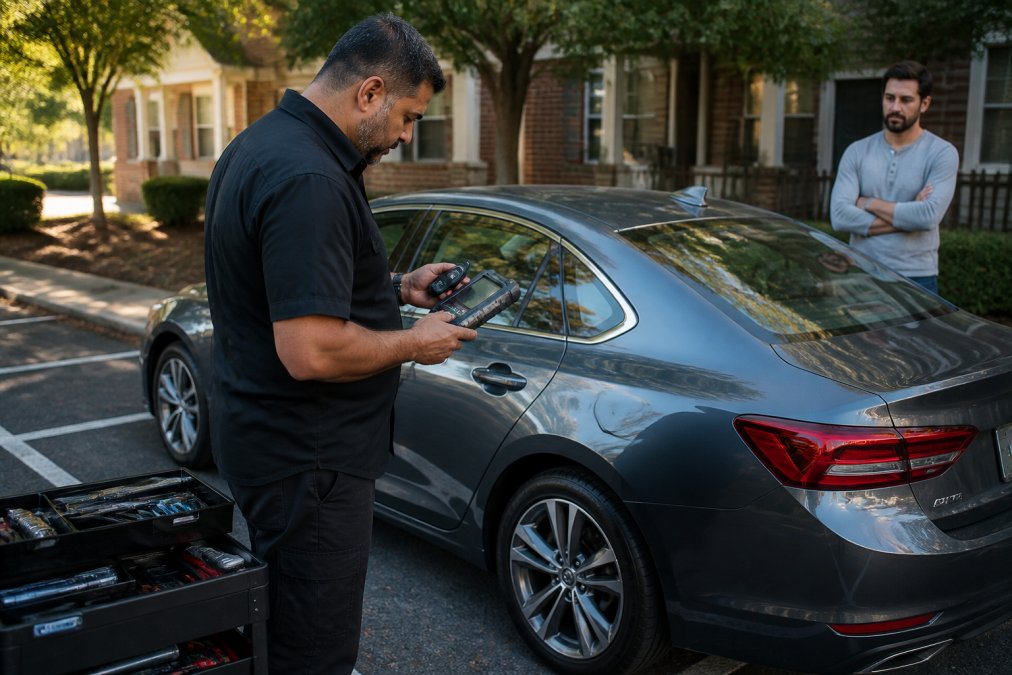
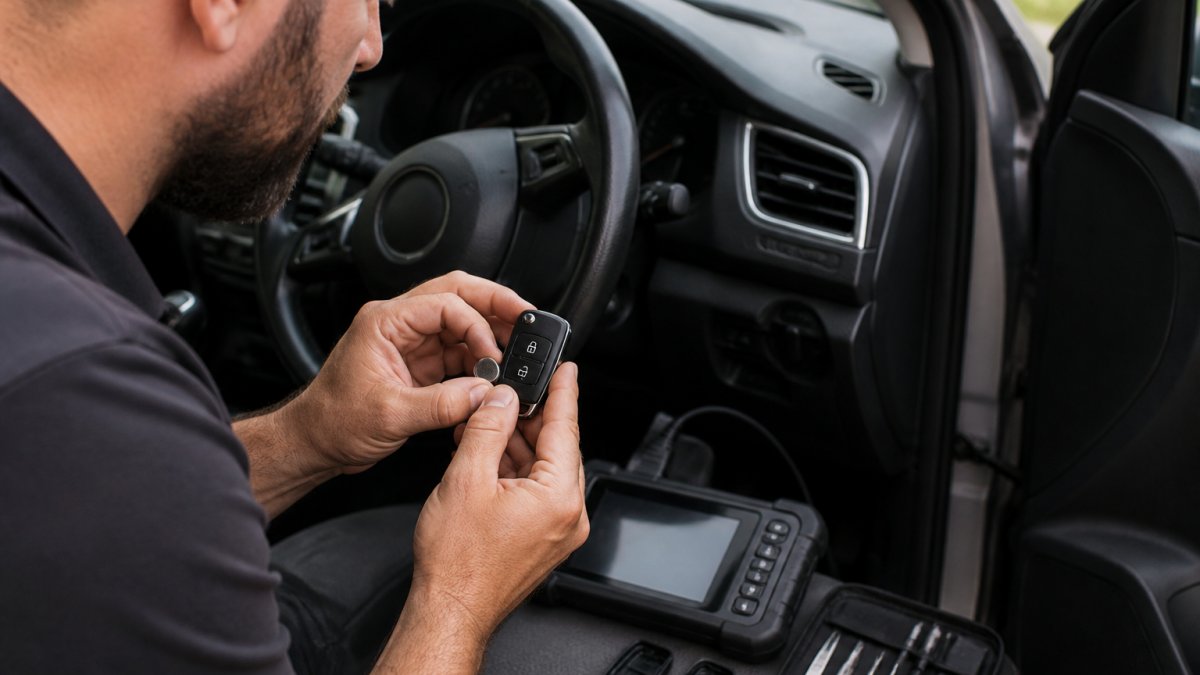
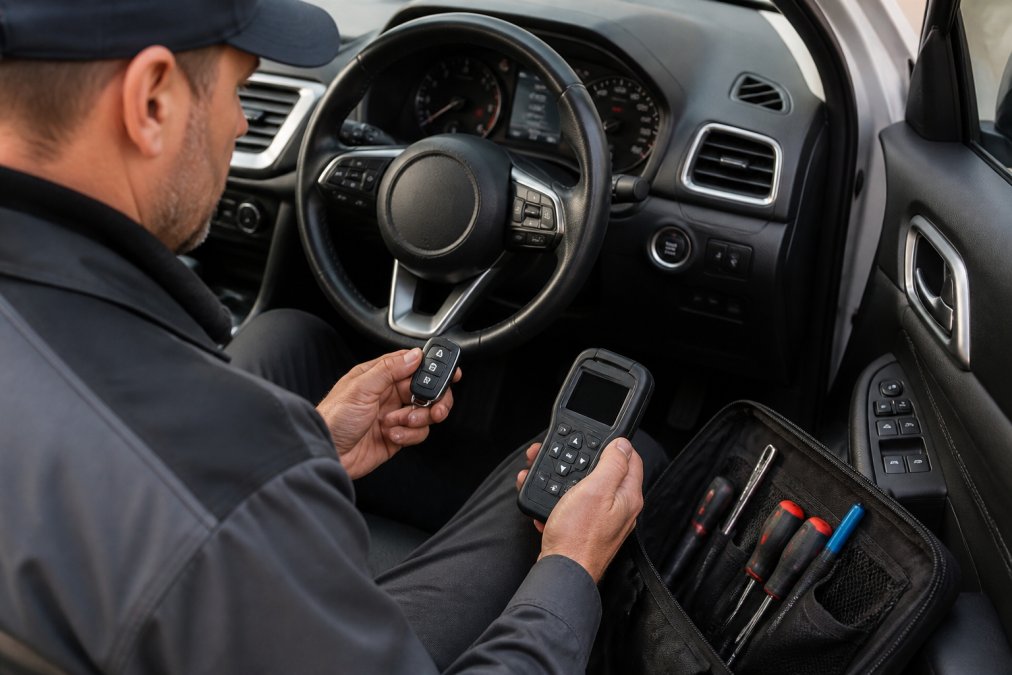
A professional mobile locksmith arrives with a vehicle-specific key blank, a professional-grade key programmer, and cutting equipment for any physical key blade required. The process involves connecting to the OBD-II port, running the vehicle's programming sequence, and verifying the new key starts the vehicle and operates all remote functions.
What separates a reliable mobile service from an unreliable one is preparation. The locksmith should ask for your vehicle's year, make, model, and VIN before arriving.
What Information to Have Ready When You Call
Having the right information ready speeds up the service call significantly. Have the following ready:
- Year, make, and model, Be specific. A 2021 Honda CR-V and a 2021 Honda Pilot use different key systems.
- Vehicle Identification Number (VIN), Found on the driver's side dashboard or registration documents. Essential for PIN retrieval on all-keys-lost jobs.
- Number of working keys, If you have one key remaining, the programming procedure differs from an all-keys-lost scenario.
- Key type, Do you have a remote head key, a separate fob and key, or a proximity-only smart key?
- Your location, For mobile services, the locksmith needs to know if you're in a parking garage, private driveway, or roadside location.
VIN-Based Programming and Troubleshooting Failed Attempts
The vehicle identification number is more than a registration detail, it's the key to your car's security architecture.
For all-keys-lost scenarios, the locksmith must retrieve the vehicle's PIN code from a manufacturer security database using the VIN. This PIN authorizes the immobilizer reset that allows new keys to be programmed. Reputable locksmiths maintain subscriptions to automotive security databases that provide VIN-based PIN access for licensed professionals.
Failed programming attempts can occur for several reasons:
- Incorrect key blank: The fob shell or transponder chip doesn't match the vehicle's frequency or encryption requirements. Resolution: verify the OEM part number against the VIN before cutting.
- ECU communication failure: The diagnostic tool loses connection mid-sequence. Resolution: restart the programming sequence from the beginning.
- Immobilizer lockout: Some vehicles lock the immobilizer after failed programming attempts. Resolution: a locksmith with manufacturer database access can reset the lockout counter.
- Post-update incompatibility: An ECU firmware update changed the key synchronization protocol. Resolution: reprogram the key against the current firmware version.
Push-to-Start Programming: Self-Service vs. Professional Locksmith
Self-programming a push-to-start key fob is technically possible for a small number of older vehicles from the mid-2000s to early 2010s. For most vehicles manufactured after 2015, self-programming is not an option.
Modern immobilizer systems require a security PIN that is not accessible to vehicle owners. The programming sequence communicates directly with the ECU through protocols that require professional diagnostic hardware. There is no steering wheel button sequence or door-lock trick that bypasses this.
For any vehicle with push-to-start ignition manufactured in the past decade, professional programming is the only reliable path.
According to AAA's automotive advisory resources on vehicle security, consumers should verify that any automotive locksmith they hire is licensed, insured, and uses professional-grade diagnostic equipment before allowing access to their vehicle's OBD-II port.
The practical checklist for choosing a push-to-start programming service:
- Locksmith confirms tool compatibility with your specific year, make, and model before arrival
- Locksmith asks for your VIN before the appointment
- Locksmith can explain the programming procedure for your vehicle type
- Locksmith uses OEM or OEM-equivalent key blanks
- Locksmith is licensed and insured in your state
- Locksmith provides a written receipt with vehicle and service details
For push-to-start key programming and smart key services in Northern Virginia, contact ADAM Keys & Remote to request an estimate and discuss your vehicle's specific needs.
Frequently Asked Questions
Can a locksmith program a push-to-start key fob if I've lost all my keys?
Yes, a qualified auto locksmith with dealer-level diagnostic tools can program a push-to-start key fob even when no working key exists. This process, sometimes called an 'all keys lost' procedure, requires accessing the vehicle's onboard computer via the OBD-II port and using specialized software to register a new proximity key. It typically takes longer than adding a spare key and may require VIN verification. ADAM Keys & Remote handles all-keys-lost situations on-site throughout Northern Virginia.
Do I need to go to a dealership for push-to-start key replacement?
Not necessarily. A professional mobile locksmith equipped with OEM-compatible diagnostic tools and dealer-level software can program smart keys and proximity fobs for most makes and models without a dealership visit. Dealers are sometimes the only option for certain high-security vehicles with proprietary encryption, but for the majority of cars on the road today, a certified auto locksmith can complete push-to-start programming on-site with greater convenience.
What equipment does a locksmith use to program modern smart keys?
Programming a modern smart key or push-to-start fob requires more than a blank key. Locksmiths use professional-grade diagnostic tools that connect to the vehicle's OBD-II port to communicate with the ECU and immobilizer system. High-end programmers can read transponder chip data, write new key synchronization codes, and generate rolling codes for keyless entry. Some late-model vehicles also require online token-based authorization, which only locksmiths with verified dealer-level access credentials can obtain.
Are aftermarket key fobs safe to use for push-to-start vehicles?
Aftermarket fobs vary widely in quality. Lower-grade options may not replicate OEM encryption standards or rolling code protocols accurately, which can cause intermittent failures or, in some cases, create security vulnerabilities in the immobilizer system. For push-to-start vehicles, using an OEM or high-quality OEM-equivalent key is strongly recommended. When requesting key fob programming, ask your locksmith whether the key blank they are using meets your vehicle manufacturer's specifications.
ADAM Keys & Remote specializes in mobile smart key and key fob programming for drivers throughout Northern Virginia, bringing professional diagnostic equipment directly to your location. If you're dealing with a lost push-to-start key, a malfunctioning smart key, or need a spare programmed without the dealership wait, contact ADAM Keys & Remote for an estimate and let us confirm compatibility with your vehicle before you commit to anything.
This article was written using GrandRanker