 blog
7 Things to Know About Aftermarket Car Key Reliability
Quick Summary
Aftermarket car keys are reliable when the key is the right type for your vehicle and it is programmed correctly. Reliability depends on three things: the quality of the blank, the chip inside it, and the programming.
- An aftermarket car key is a replacement key made by a company other than your vehicle's manufacturer.
- A perfectly cut key won't start your car if the transponder isn't programmed to match your vehicle's system.
- Give your VIN when you call so we can confirm what your vehicle actually needs.
- A fob that suddenly stops responding is often just a dead coin-cell battery, not a bad key.
- Test the new key while the technician is still present so programming can be rechecked on the spot.
Table of Contents
- What Makes an Aftermarket Car Key Reliable or Risky
- Aftermarket Car Key vs OEM: Where the Real Differences Are
- Replacement Car Key Compatibility: What Your Vehicle Actually Requires
- Aftermarket Key Fob Programming: What Can and Cannot Be Done On Site
- Common Reasons a Replacement Key Stops Working
- How to Test a Replacement Car Key Before You Rely on It
- Book Mobile Key Service in Manassas Park
- Frequently Asked Questions
7 Things to Know About Aftermarket Car Key Reliability
Call Now: Call (571) 300-6791 | Get a Free Estimate
Last Updated: October 30, 2026
What Makes an Aftermarket Car Key Reliable or Risky
Drivers often ask whether aftermarket car keys are reliable. The answer depends on whether the key is the right type for your vehicle and whether it is programmed correctly. An aftermarket car key is a replacement key made by a company other than your vehicle's manufacturer, and its reliability depends on three things: the quality of the blank, the chip inside it, and the programming.
At ADAM Keys & Remote, we serve drivers across Manassas Park, VA and the wider Northern Virginia area.
Below, we'll show you exactly what separates a good aftermarket key from a bad one, and how to test yours before you depend on it.
Aftermarket Car Key vs OEM: Where the Real Differences Are
The main difference between an aftermarket car key and an OEM key comes down to who makes it and how it's sourced, not whether it can work. OEM stands for original equipment manufacturer, meaning the key comes from the same company that built your car. Aftermarket keys are made by third-party suppliers.
Here's how they compare in practice:
| Factor | OEM Key | Aftermarket Key |
|---|---|---|
| Source | Vehicle manufacturer | Third-party supplier |
| Fit and finish | Matches factory spec | Varies by supplier quality |
| Chip compatibility | Guaranteed for your model | Must be matched correctly |
| Availability | Often ordered and shipped | Usually available on site |
| Programming | Dealer equipment | Depends on the locksmith's tools |
The difference between OEM and aftermarket keys comes down to quality control. A well-made aftermarket key from a reputable supplier can perform like the original, while a key with a weak chip or a poorly cut blade is more likely to cause problems.
Replacement Car Key Compatibility: What Your Vehicle Actually Requires
Replacement car key compatibility depends on your vehicle's year, make, model, and the type of security system it uses. Not every key works with every car. That's the first thing we check before quoting any job.
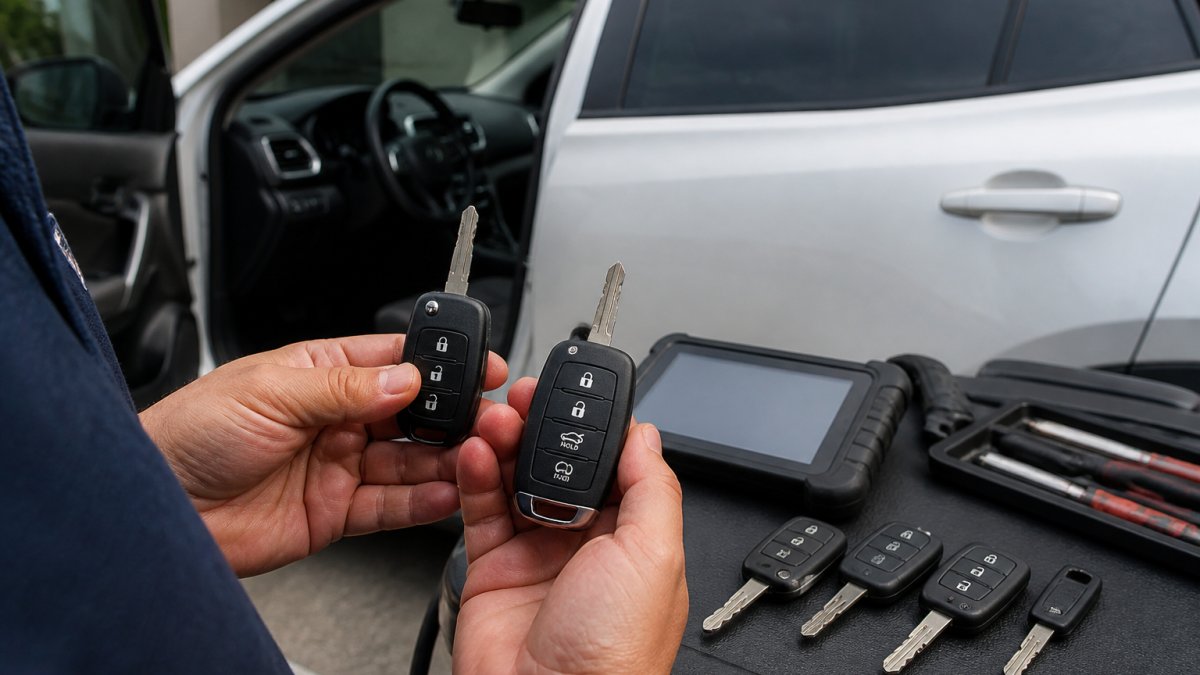
Modern vehicles generally fall into a few key types:
- Traditional metal key: Older cars with no chip. Simple to cut and copy.
- Transponder key: Has a chip that must be programmed to the car's computer.
- Smart key or fob: Keyless entry and push-to-start, requires electronic pairing.
- Proximity fob: Detects the fob nearby so you can start with a button.
The chip is the part that matters most. Even a perfectly cut key won't start your car if the transponder isn't programmed to match your vehicle's system.
A common mistake is buying a key online based only on the model year. Trim levels and mid-year changes can shift which chip your car uses. Give us your VIN when you call, and we can confirm what your vehicle actually needs before we arrive.
Aftermarket Key Fob Programming: What Can and Cannot Be Done On Site
Aftermarket key fob programming can often be done on site, but not always. It depends on your vehicle's system and the equipment required to pair a new fob to your car's computer.
Here's what typically can be handled during a mobile visit:
- Cutting and programming transponder keys for many makes and models
- Pairing replacement fobs for many vehicles
- Duplicating a working spare key
- Diagnosing why an existing key stopped working
Some newer vehicles lock programming behind manufacturer-only software. In those cases, programming may not be possible on site, and we will tell you before any work begins.
DIY programming carries risk. A wrong sequence or a cheap tool can interrupt the pairing process and leave the system confused. If you want to learn more about mobile fob programming in Northern Virginia, see our mobile automotive locksmith page.
Common Reasons a Replacement Key Stops Working
A replacement key usually stops working for one of four reasons: a dead battery, a failed chip, physical damage, or a programming fault. Finding the cause fast saves you from buying a key you didn't need.
Watch out: a fob that suddenly stops responding is often just a dead coin-cell battery, not a bad key. Replacing the battery is the first thing to try.
The usual culprits:
- Dead battery in the fob: The most common cause, and the easiest fix.
- Damaged chip: A drop or moisture can kill the transponder inside.
- Worn or bent blade: A poorly cut key wears down and stops turning cleanly.
- Lost programming: The car's computer can lose its pairing after a battery change or repair.
- Signal interference: Sometimes the issue is the car's receiver, not the key.
If your key worked and then quit, don't assume the key is junk. Our guide to why key fob programming fails covers causes and fixes.
How to Test a Replacement Car Key Before You Rely on It
Test a replacement car key the moment you get it, not the first time you're stranded in a parking lot. Testing the key while the technician is still present can catch problems early.
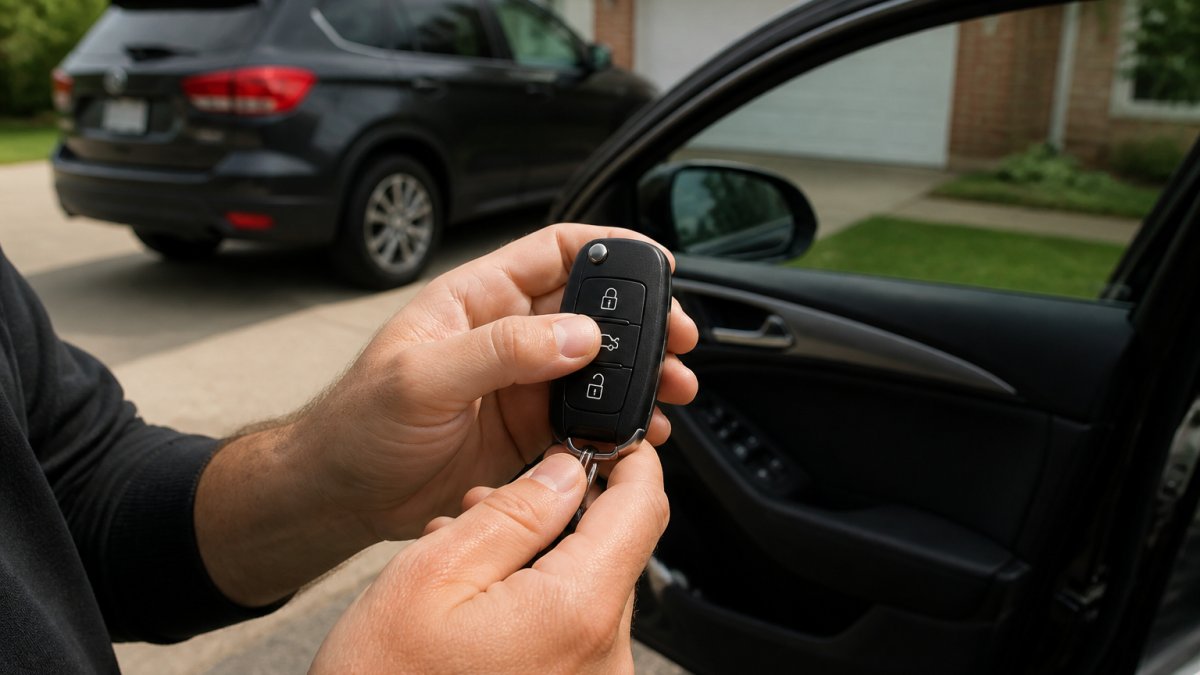
Run through this checklist before you pay and drive away:
- Lock and unlock every door with the fob, from a few feet away
- Start the engine with the key or fob in the car
- Try the trunk release and panic button if your fob has them
- Start the car twice to confirm the pairing holds
- Test the spare key separately if you had two made
- Walk 20 feet away and confirm the fob still responds
If any step fails, say so on the spot so the programming can be rechecked before the technician leaves.
Book Mobile Key Service in Manassas Park
Getting a reliable replacement key doesn't require a tow or a day at the dealer. Mobile service brings the cutting and programming to your driveway, office, or roadside spot in Manassas Park and the surrounding area.
Here's what to have ready when you call:
- Your vehicle's year, make, model, and VIN
- Whether you have any working key left
- Your location and how soon you need service
We serve drivers across Manassas, Woodbridge, Fairfax, Centreville, and nearby Northern Virginia communities. Our business hours are 7:00 AM to 11:30 PM daily. If you've lost every key, our all keys lost service can get you moving again. Need a spare before you're stuck? Our duplicate car keys service handles that too. When you're ready, request a Free Estimate.
Call Now: Call (571) 300-6791 | Get a Free Estimate: Get a Free Estimate
Aftermarket keys are reliable when they're matched to your vehicle and programmed correctly. That's the part most drivers can't verify on their own, and it's exactly where a professional mobile service earns its keep. ADAM Keys & Remote brings key cutting, transponder programming, and smart key pairing to your location across Manassas Park and Northern Virginia. We can confirm compatibility before we arrive and work with you on the spot, with service hours from 7:00 AM to 11:30 PM daily. Get started with ADAM Keys & Remote and drive away with a key you can trust.
Frequently Asked Questions
Are aftermarket car keys reliable?
A well-made aftermarket car key from a reputable supplier can be reliable, but reliability depends on three things: the quality of the key blank and chip, whether it is compatible with your vehicle's immobilizer system, and whether it is programmed correctly. A cheap, unverified key bought online may fail to pair or lose its programming. Having a professional check the key on the vehicle before you drive away can reduce the risk.
Can a locksmith program an aftermarket key fob?
In many cases yes, but not for every vehicle. Programming an aftermarket key fob requires the correct chip type and a tool that can communicate with your car's immobilizer. Some newer vehicles use encrypted systems that restrict aftermarket programming. Before any work starts, a locksmith should confirm your year, make, model and whether you have a push-to-start or transponder ignition, then tell you honestly whether an aftermarket fob can be programmed on site.
Should I buy an aftermarket key online or have a locksmith supply one?
Buying online is cheaper upfront but carries risk: the blank may be cut incorrectly, the chip may be the wrong type, or the fob may not pair with your vehicle, and returns are often difficult once a key has been cut or programmed. A locksmith supplying the key can help confirm compatibility before cutting and programming, and can test the key before you pay. If you do buy online, confirm the exact part number for your vehicle and keep the packaging until programming succeeds.
How do I test a replacement car key before relying on it?
Test it in stages. Lock and unlock every door and the trunk with the fob from several distances. Start the engine with the new key alone, with the old key out of range. Drive a short distance, shut the engine off, and restart. Check that the security light on the dash behaves normally. If any step fails, have the key reprogrammed or replaced before you depend on it as your only key.